
I recently came across a couple of studies about how well microschools are working around the country. I share a summary of the study below, and then compare the results to microschools in New Hampshire.
We also had our last fair of 2026 this past Saturday, which went very well. Thanks and pictures come before the article. It is my pleasure to interact with so many families and individuals who care deeply about education.
Enjoy the beautiful fall weather!
-Jody
Jody Underwood, Ph.D.
President, Education Options
Loudon Fair a Success!
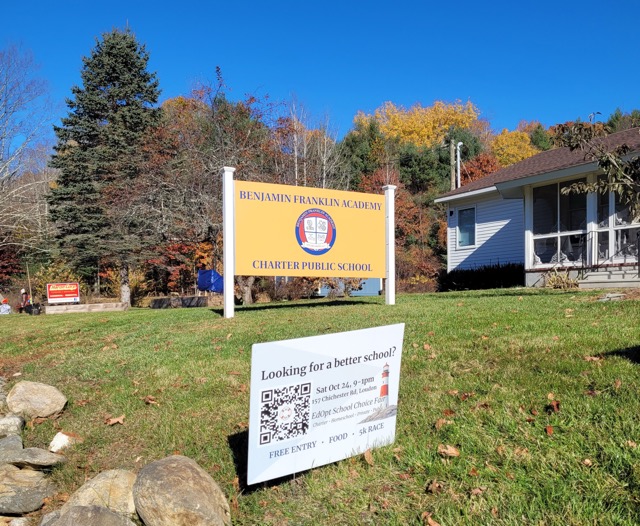
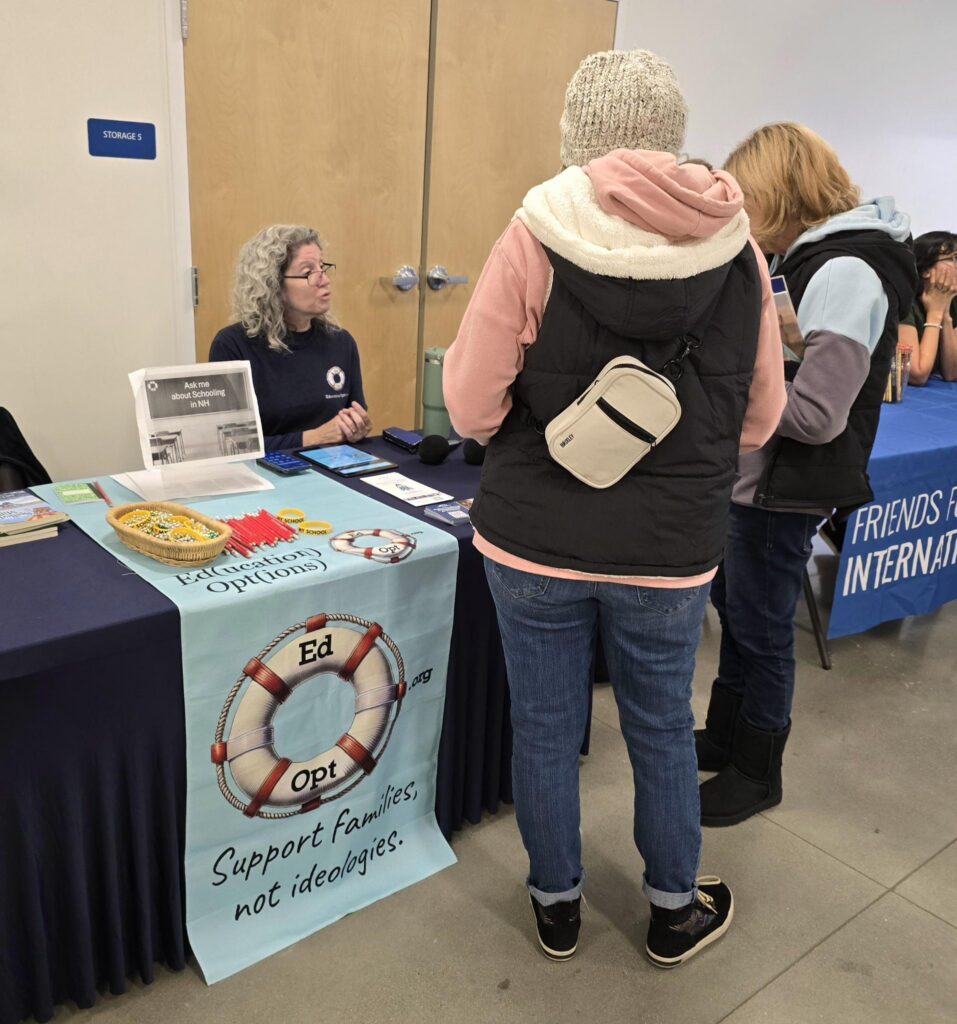
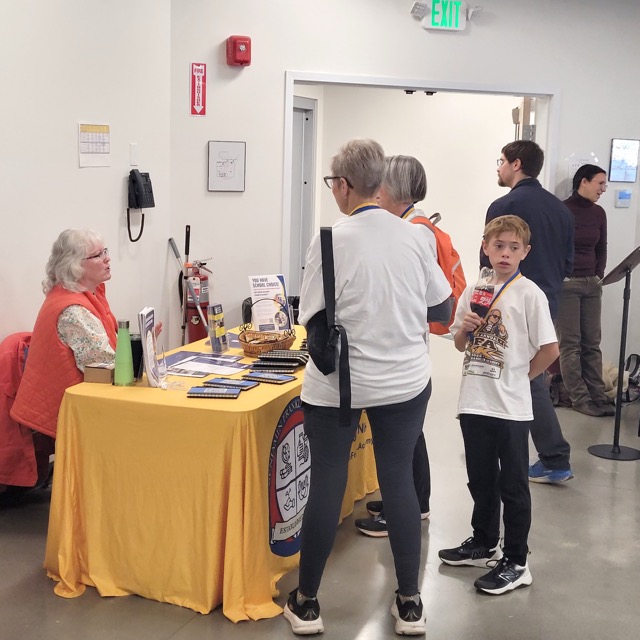
Our last fair of the year was this past Saturday October 24 in Loudon. It was held at the Benjamin Franklin Academy Charter School. Thank you to Monica Murphy and Jaime Koladish for making it happen! And, as always, thanks to all the education providers who came out. It was a lovely day and event. We’re already planning to do it again next year.
Lots of families walked through our exhibits and had great conversations. Here are some pictures, with many more pictures here.
Stay tuned for fairs in 2027! Let us know if you want to organize a fair in your area or otherwise help spread the word.
Let your friends know about these fairs. Word of mouth is the best way to advertise.
QUESTIONS WORTH ASKING
Are Microschools Working?
Microschools are attracting increasing attention across the country. Estimates place the microschool student population between 1 and 1.5 million students nationwide. These small, flexible learning environments promise something many families are looking for: individualized instruction, close relationships, and education designed around children rather than a standardized system.
But are they working? Two new national studies offer some intriguing answers. Microschool students appear to be making expected academic progress while reporting remarkably positive experiences at school. And many of these schools serve students with learning needs that conventional schools may struggle to accommodate.
The findings raise a larger question: How should we measure whether a school is successful?
Who Goes to Microschools?
The National Microschooling Center’s 2026 American Microschools Sector Analysis examined 1,000 operating, planned, and closed microschools across the country.
The median nonpublic microschool serves just 20 students. Among students currently attending microschools, 54% previously attended district public schools.
These schools also serve a striking number of students with different learning needs. 80% of microschools report serving neurodivergent students, 56% serve students with other special needs, and 56% serve students who are at least two grade levels behind.
But descriptions of microschools don’t tell us whether they are effective. For that, we need to look at outcomes.
Are Students Learning?
A second 2026 study, Measuring the Microschool Experience, looked at academics as well as parent and student experiences at 43 microschools in 20 states.
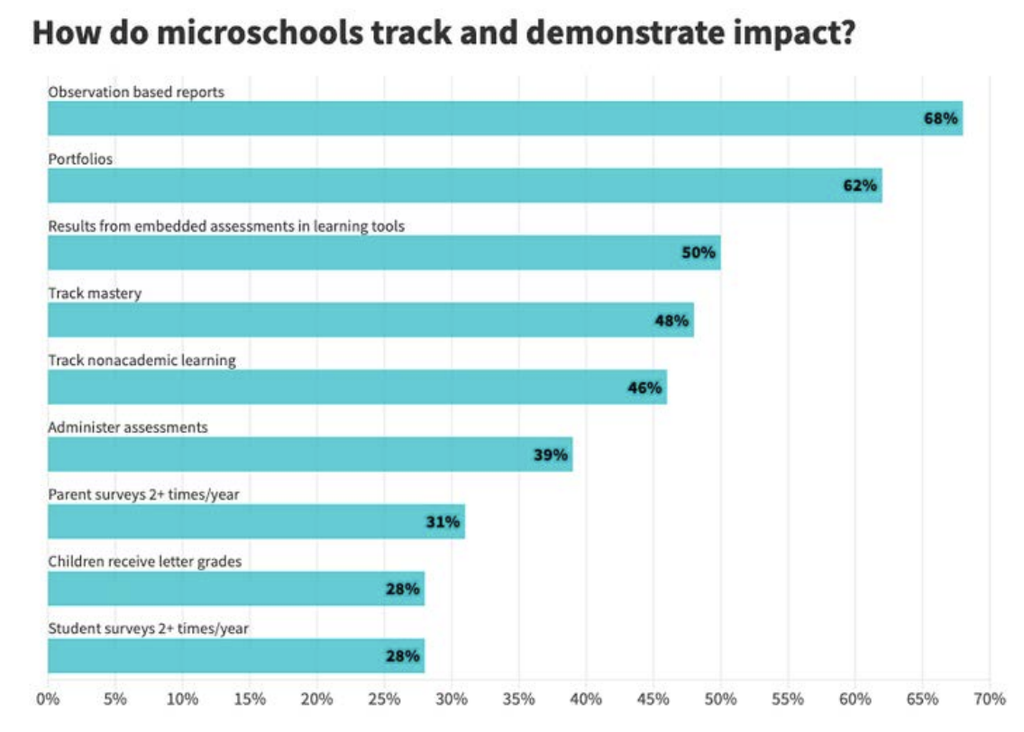
For the academic portion, students took the i-Ready Diagnostic, a standardized computer-adaptive assessment, in fall 2025 and again in spring 2026. The basic finding was surprisingly ordinary: Students generally made about as much academic progress as expected on standardized tests. They didn’t show extraordinary academic gains, but neither did they appear to fall behind.
That becomes more interesting when we look at the students being served. Across the study samples, approximately 40%–47% had an identified disability, special learning need, or chronic medical condition. Students in schools specifically focused on special needs performed comparably to those in other participating microschools after accounting for measured differences in students and their starting achievement.
That’s encouraging, but it doesn’t prove microschools produce better academic outcomes than conventional schools. It is also important to distinguish growth from proficiency. A student who begins two grade levels behind and makes a year’s worth of progress may still be behind.
Students Say Something Else Is Happening
Standardized tests measure only part of the school experience. More than 1,000 microschool students participated in the study’s student survey:
- 92% said they liked school.
- 95% felt safe.
- 91% felt they belonged.
- 93% said people at school knew them well.
- 97% said their teachers cared about them.
Among students who had attended a different school the previous year, 86% said this school year was better, while 89% believed they were learning much more. Those are perceptions, not objective comparisons with their previous schools. But they tell us something important about how children experience their education.
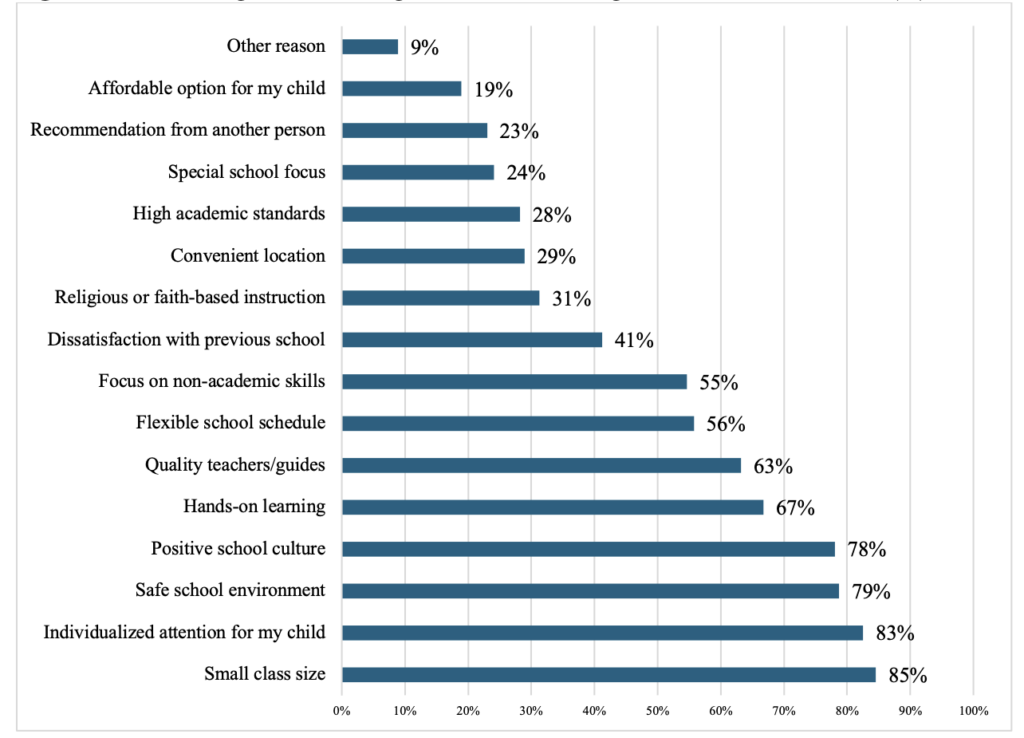
Parents were even more enthusiastic. Among 291 parent respondents, 97% were satisfied or very satisfied with their child’s microschool. Families particularly valued individualized attention, small classes, safety, and positive school culture.
Interestingly, individualized attention — not standardized test performance — was the most important consideration parents identified when choosing a microschool. This chart shows all the reasons parents had.
Some Important Caveats
These results deserve attention, but they don’t prove that microschools are better.
Participating schools volunteered for the research; they weren’t randomly selected. Families also chose these schools and chose whether to participate in the surveys. Satisfied families may therefore be overrepresented.
Most importantly, the study didn’t include a matched comparison group of similar students attending conventional schools.
We can say that the participating microschool students generally made expected academic progress and reported very positive experiences. We can’t say that microschools caused those outcomes or that the students would have done worse elsewhere.
That’s an important question for future research.
We’re Seeing the Same Model in New Hampshire
The national findings sound familiar when compared with the New Hampshire microschools we’ve visited through EdOpt.
Earlier this year, we interviewed the founders of Latitude Learning in Derry, Wildcat Microschool in Haverhill, and The Learning Cove in Bow for our Moms Who Started Microschools episode of our Choosing School podcast.
All three emphasize many of the characteristics identified in the national research: small groups, individualized learning, flexibility, strong relationships, and opportunities for children to learn differently. And all three grew out of needs their founders didn’t see being adequately met elsewhere.
Latitude has grown from roughly 30 students in its earlier years to about 120 enrolled students. Wildcat, which began with only a handful of students, has grown to 27. The Learning Cove finished its first year with 21 students.
Their growth doesn’t prove academic effectiveness. But it does tell us something else: New Hampshire families want these options.
So, Are Microschools Working?
The answer depends partly on what we mean by working. Academic achievement matters. Children need to learn to read, write, calculate, reason, and acquire the knowledge and skills they’ll need as adults.
But what else should count?
Does a child feel safe? Do they have strong relationships with teachers? Are they developing confidence? Are they engaged in learning? Are their individual needs being addressed?
And perhaps most importantly: Is this particular educational environment helping this particular child thrive?
The emerging research doesn’t prove that microschools are better than conventional schools. It does show students making expected academic progress while reporting unusually strong feelings of safety, belonging, and connection — and parents who are overwhelmingly satisfied.
That deserves further study.
What If There Isn’t One Near You?
There’s another lesson in the microschool movement: You don’t have to wait for someone else to create a better option.
Maybe your child needs something different, but there are few alternatives nearby; maybe the closest microschool has a waiting list; maybe you’ve talked with other parents who are looking for the same thing. Or perhaps you’re a teacher or homeschool parent who has thought, There has to be a better way.
Many microschools began with exactly these kinds of problems.
And they don’t have to start big. The median nonpublic microschool in the national study serves only 20 students. Here in New Hampshire, we’ve seen microschools start with just a handful of children and grow as other families discover them.
A new microschool might begin with a few families and a shared idea of what children need. It might focus on students who learn differently, hands-on learning, academics, outdoor education, flexible schedules — or simply creating a small community where children are known well.
If there isn’t an option like that near you, perhaps your community needs you to help start one.
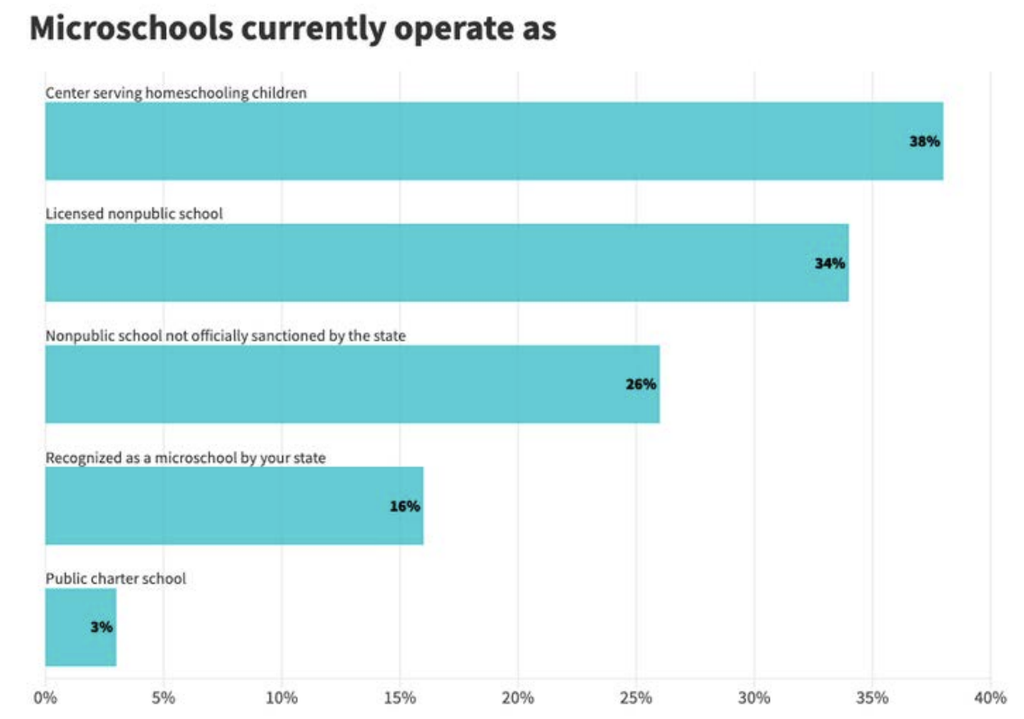
Starting Small Doesn’t Mean It’s Easy
Starting a microschool isn’t without challenges. National research on microschools that closed found that founders most often cited personal circumstances, followed by financial strain, low enrollment, and disagreements with parents. Small schools can be especially dependent on the person who created them.
But closing doesn’t necessarily mean failing. Only 7% of closed microschools said they had closed without fulfilling their purpose. Some met a temporary community need, proved a concept, or served a particular group of students before closing.
EdOpt would like to see more educational options available to families throughout New Hampshire. If you’re thinking about starting a microschool or learning center, we’d love to hear from you and help connect you with people who have already done it.
A Question Worth Asking
Maybe the most important question isn’t whether microschools work. It’s whether we’re measuring the things that matter when we decide if any school is working.
And if the schools available to your child aren’t working, there’s another question worth asking: What could we create instead?
[If you like this article, please share it with a friend.]
Four (4) Choosing School Podcasts!
Check them all out at our Choosing School playlist:
- Episode 4: Why We Chose Differently. Jody speaks with Robert Qua, former Special Ed Director, why he left the school system; Jaime Koladish, Founder of Benjamin Franklin Academy, why she started a charter school; Frank Edelblut, former Commissioner of the NH Department of Education, why he homeschooled all his kids. The conversation takes off from there.
- Episode 3: Special Needs, Different Paths. A conversation with Bob, a former special education director, and two parents, Viviana and Brandon, who each support their child’s unique paths.
- Episode 2: Moms Who Started Microschools in NH. Three unique moms with different yet related stories: Kitty at Latitude Learning Center in Derry, Dianna at The Learning Cove in Bow, and Heather at Wildcat Microschool in Haverill.
- Episode 1: The Many Paths of Homeschooling. Katy (10 and 12 year-old kids), Kristi (3, 6, 9, 10 yos), and Mari (14 yo) talk about how they support their children through different types of schooling, including home education.
[If you like these podcasts, please share them with a friend.]
A Little About EdOpt
Use our website to find education providers options around the state. If your organization isn’t there, please enter it!
Also check out our AI Assistant, the EdOpt Navigator, available on every page on our website. It’s wicked smaht about education in New Hampshire.
[If someone forwarded this post to you, please consider subscribing to EdOpt.]